How to Brand Your Etsy Shop (Without Hiring a Designer)
March 31, 2026 by Maya Patel
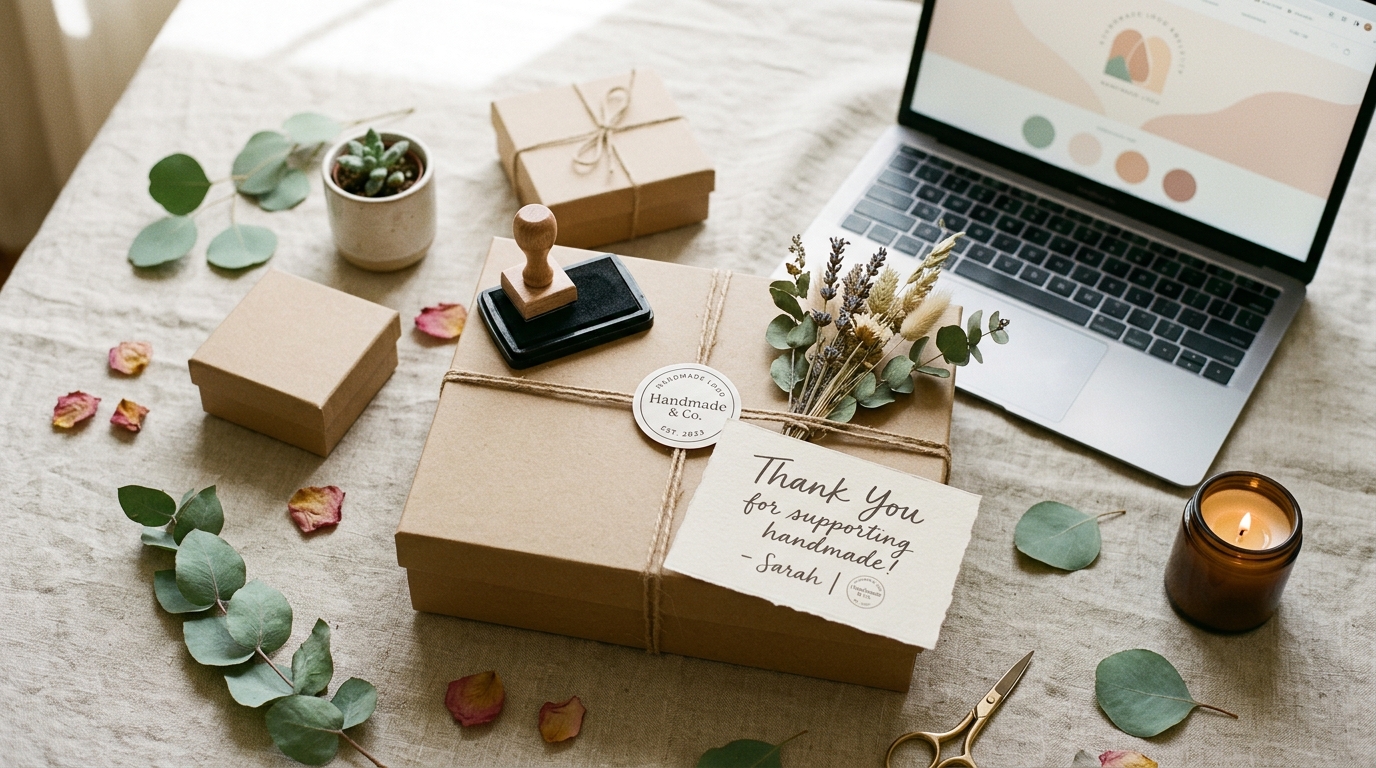
Most Etsy sellers think about branding as an afterthought. You make beautiful things, you open a shop, you list your products — and then somewhere down the line someone tells you that your shop "doesn't look cohesive." Which is frustrating, because you didn't come to Etsy to be a graphic designer.
Here's the thing though: branding your Etsy shop doesn't take a design background. It takes consistency. And consistency is something you can build in an afternoon.
What "branding" actually means for an Etsy seller
People overcomplicate this. Your Etsy brand is just the answer to this question: when someone visits your shop, what do they immediately understand about you?
That understanding comes from a few things working together:
- Your shop banner and logo — the first visual impression
- Your product photos — the biggest driver of whether someone clicks "add to cart"
- Your shop name and bio — why you exist and who you're for
- Your product titles and descriptions — your voice and how you talk to customers
- Your packaging and thank-you notes — what the experience feels like after purchase
When these things feel like they came from the same person with a clear point of view, buyers trust you. When they feel random, buyers hesitate — even if your actual products are great.
Step 1: Pick a visual direction and stick to it
You don't need a formal brand guide. You need two or three decisions you'll apply consistently:
A color palette. Choose two or three colors and use them everywhere — your banner, your packaging, your product photography backgrounds. Doesn't need to be fancy. Muted earth tones, bright pastels, clean black and white — just pick and commit.
A photo style. Decide whether your photos are light and airy, dark and moody, clean white background, or warm lifestyle. Browse your competitors on Etsy. Notice which shops look "put together" versus which look random. The put-together ones usually just have a consistent photo style.
A font or text treatment. If you use text in your banner or product images, use one font, full stop.
These three decisions cost you nothing. Making them takes an hour. Not making them costs you sales every day.
Step 2: Fix your product photos first
If you do one thing after reading this, it's this: bring your product photos into visual consistency.
This doesn't mean they all need to look identical. It means they should all feel like they belong together — same general color temperature, same level of brightness, same approximate style (lifestyle vs. white background).
The fastest way to do this without a professional setup: photograph everything in the same spot at the same time of day with the same background surface. A piece of white foam board, a wooden table, a marble contact paper sheet — pick one and use it for everything.
If your products are already photographed but inconsistent, AI product photography tools can help you standardize them after the fact. BrandForge AI's product photography tool will transform phone shots into professional, consistent images — useful when you have a backlog of products photographed in different conditions.
Step 3: Write a shop bio that says something
Most Etsy shop bios either say nothing ("Welcome to my shop! I love making things.") or say too much (three paragraphs about your grandmother's sewing machine).
A good Etsy bio does three things in under 150 words:
- Who you are — specifically, not generically. "I'm a metalsmith in Portland" beats "I'm a passionate jewelry maker."
- What makes your products different — one sentence. Not features, the reason someone should buy from you over the other 400 similar shops.
- Who it's for — your customer, briefly. "Made for people who want jewelry they can actually wear every day" is more compelling than "my jewelry is perfect for any occasion."
Read it back to yourself. Does it sound like a real person wrote it, or does it sound like a template? If it sounds like a template, rewrite it.
Step 4: Build a brand profile you can reuse
Once you've made your visual and voice decisions, write them down somewhere. Even just a notes file on your phone:
- My colors: [hex codes or descriptions]
- My photo style: [one sentence]
- My voice: [three adjectives and what I avoid]
- My customer: [one sentence description]
This becomes your brief for everything — new product listings, social posts, seasonal banners, new photos. When you have a reference point, staying consistent stops being a mental effort and starts being automatic.
Tools like BrandForge AI let you formalize this into a brand profile and then generate social posts, product descriptions, and visual content that all stay consistent with it — useful if you're managing a shop that's grown past the point where you can keep it all in your head.
Step 5: Your shop name and URL still matter for search
A lot of established Etsy sellers are stuck with shop names they chose in 2015 that don't reflect what they sell. If you're newer and haven't committed yet, pick a name that includes at least one keyword related to what you sell.
"OakAndLinen" is harder to find organically than "OakAndLinenHomeDecor." Not because Etsy ranks keywords in shop names heavily, but because it gives buyers an immediate signal of what to expect — and that affects click-through when your shop shows up in search results.
If you're stuck with an old name, that's fine — focus on your listing titles and tags instead, which have much more impact on Etsy SEO than your shop name.
The difference between shops that grow and shops that stall
It's rarely about the products. Usually it's about the buying experience — how safe and confident a buyer feels about making a purchase from someone they've never met.
Your branding is what builds that confidence. Not because consistent colors are magic, but because a shop that looks intentional signals that the person behind it is serious. Buyers can tell the difference between a shop someone is proud of and a shop someone set up and forgot about.
You don't have to spend money to look like you care. You just have to make a few decisions and apply them everywhere.
Ready to build a brand profile for your Etsy shop? Start free on BrandForge AI — no design experience needed.