When Your Handmade Business Needs a Real Brand
March 31, 2026 by Sarah Chen
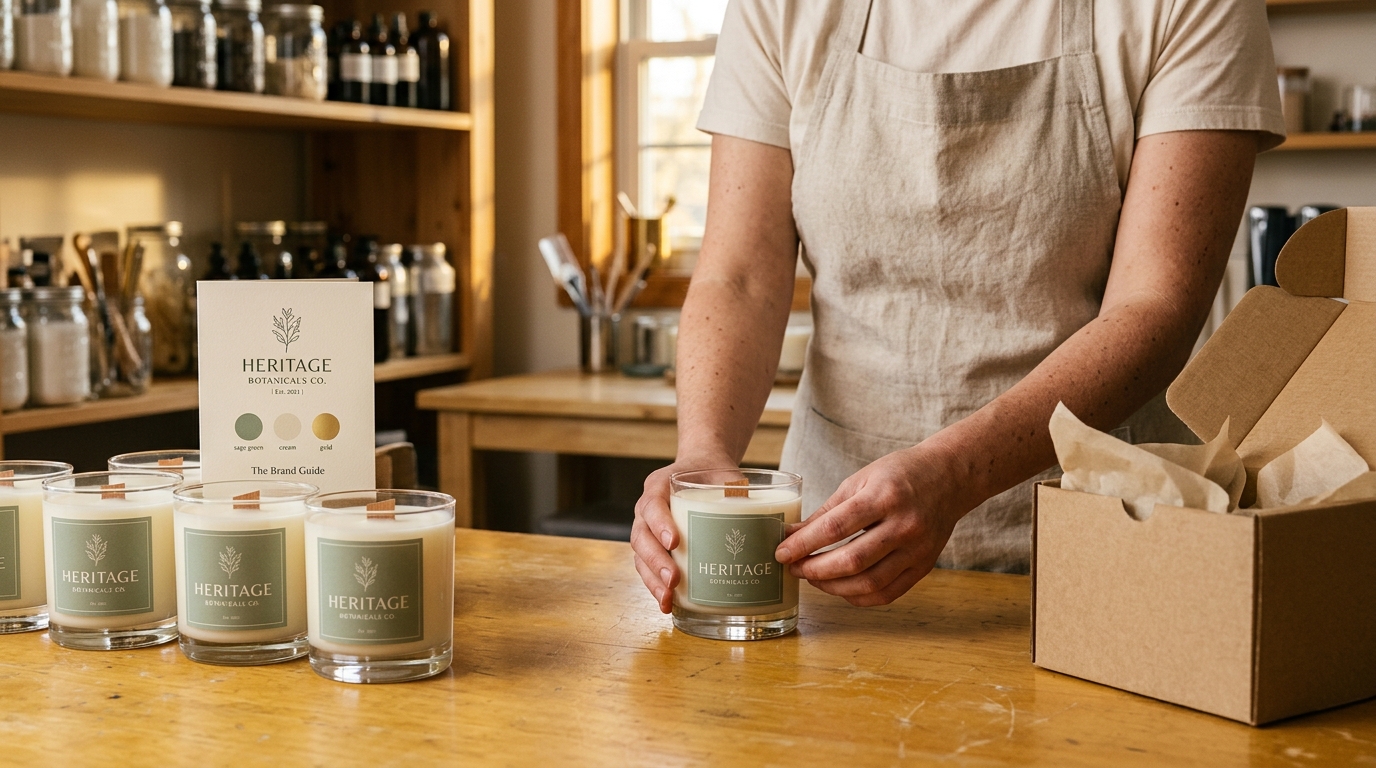
There's a moment a lot of handmade sellers recognize: your Etsy shop is working. You're getting regular orders. You're thinking about a website. You want to approach wholesale buyers or get into craft fairs. And suddenly the logo you made in Canva in 2021 and the inconsistent Instagram account you've been half-heartedly maintaining feel like they don't represent you anymore.
This is the right moment to build a real brand. Not because you need a brand to sell handmade goods — clearly you don't — but because at a certain scale, the absence of a coherent brand starts to cost you opportunities.
What changes when you go from "shop" to "brand"
A shop is where you sell things. A brand is what makes someone choose you over the other person selling similar things — and what makes them come back.
The practical differences show up in a few places:
Wholesale and stockist conversations. Boutique owners and retail buyers evaluate your brand as much as your products. They're asking: does this brand's aesthetic fit our store? Is this brand presented professionally enough that we'd be comfortable representing it? A cohesive brand identity signals that you're a serious operation.
Pricing power. A brand with a clear identity and visual presence can command higher prices than an anonymous shop selling similar products. People pay more for things that feel like they come from a source they trust and admire.
Recognition over time. When people recognize your packaging in someone's Instagram photo, or recognize your visual style immediately when they see your products in a market, you've built brand equity. That recognition is compounding — it makes every subsequent sale easier.
None of these things happen without intentional brand building. They also don't require massive investment. They require making clear decisions about who you are and being consistent about expressing that.
The brand decisions that actually matter for handmade businesses
Your brand story: the honest version
Handmade businesses have a built-in advantage that mass-market brands spend millions trying to manufacture: authenticity. You're a real person who makes things. The story of why you started, what you care about in your craft, and what you're trying to create in the world is genuinely interesting — and it's yours.
Most handmade sellers undersell this. Their About page is either a resume (where they trained, what techniques they use) or an apology (something about juggling this alongside their day job). Buyers don't want a resume or an apology. They want to understand who you are and why they should trust you.
Write your brand story around three things:
- Why you make what you make (not the biography — the reason)
- What you care about in your craft (what makes your work distinct)
- Who it's for (your customer, not everyone)
Keep it under 200 words. Then use that same story — condensed, adapted — across your Etsy shop bio, your website About page, your Instagram bio, and your market booth signage.
Your visual identity: consistent doesn't mean corporate
A lot of handmade sellers resist building a formal visual identity because they're worried about it making them look too corporate or losing the handmade feel. This is a false dichotomy.
The handmade aesthetic is a specific visual language: natural materials, imperfect textures, warm light, organic shapes, muted or earthy color palettes. This aesthetic is entirely achievable with a consistent brand identity — it just means your brand guidelines look different from a tech company's.
What you need:
- A logo that reflects your aesthetic (simple wordmark, hand-lettered style, or minimal icon)
- Two to three colors that are consistent across everything
- A photo style that's clearly yours
- Fonts that fit your brand personality
You don't need to pay a designer thousands for this. AI brand generators like BrandForge AI can produce a full brand kit from a description of your aesthetic and brand values — in minutes, for free. The output is a starting point you refine to your taste, not a finished product you take or leave.
Your packaging: the in-person brand moment
For physical product businesses, packaging is your most powerful brand touchpoint. The unboxing experience is something customers photograph and share. Getting an order that feels considered and beautiful creates emotional attachment in a way that no digital marketing can replicate.
This doesn't mean expensive custom printed boxes. It means thinking about the experience: tissue paper in your brand color, a handwritten note, a simple stamp on kraft paper, a sticker with your logo. The details that communicate that a real person cared about this order.
The sellers who get photographed and shared are the ones whose packaging is worth photographing. This is earned attention, not paid for.
Consistency: the work that never stops
Building a brand is mostly a practice of consistency. Making the same visual and voice decisions, applied across everything you do, over months and years.
This is harder than it sounds for handmade businesses because the brand is often just you — and you have moods, busy seasons, and varying amounts of creative energy. Some weeks your Instagram posts look great and some weeks you just need to get something up.
Tools help. Having a defined brand profile means you're not starting from scratch every time you create something. Having AI-generated drafts to react to means your low-energy posting days still produce content that's on-brand. BrandForge AI's social media generator generates posts based on your brand profile — so even your rushed posts have the right tone and visual direction.
The goal isn't perfection. It's a floor of quality below which you don't go.
The transition: doing it without losing your voice
The thing handmade sellers worry about most when professionalizing their brand is losing the personal quality that makes them special. This is a legitimate concern — there's a version of "brand building" that produces something generic and corporate that has nothing to do with the actual person making the things.
Avoid this by keeping your brand story at the center of everything. Your brand identity should make the personal quality of your work more visible, not less. The colors, the fonts, the photography style, the copy voice — all of it should feel like an extension of who you are and what you make, not a costume you put on to seem more professional.
The sellers who do this well look polished and personal at the same time. That combination — credible and human — is the thing that drives both first purchases and loyal repeat customers.
Ready to build a brand for your handmade business? Start free on BrandForge AI — describe your craft and aesthetic, and get a complete brand kit in under a minute.