How Etsy Sellers Actually Drive Traffic from Instagram
March 31, 2026 by Maya Patel
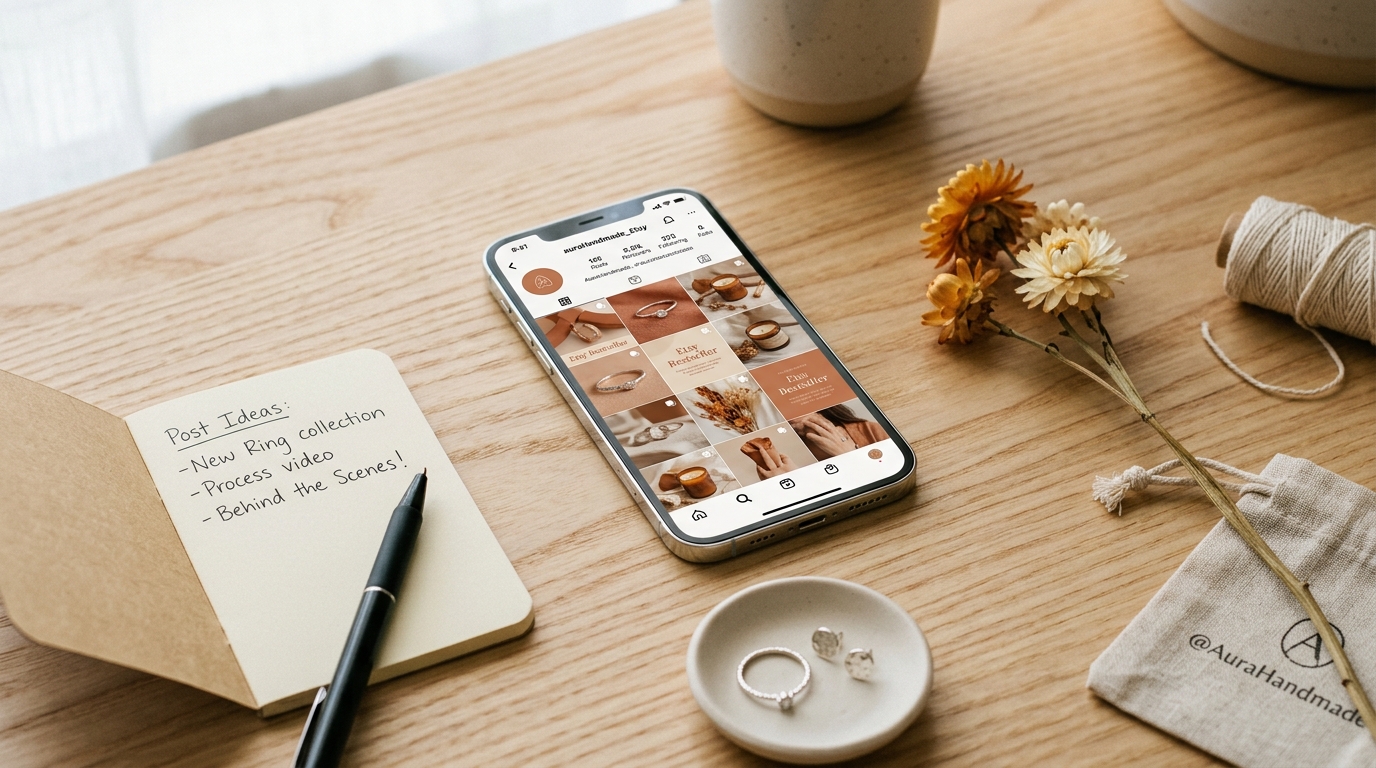
A lot of Etsy sellers are on Instagram. Most of them are posting into a void and wondering why it's not translating into shop visits.
Instagram can drive genuine, recurring traffic to your Etsy shop. But it works differently than most sellers expect, and the approach that works is not the one most people start with.
The problem with how most Etsy sellers use Instagram
Most sellers treat their Instagram account as a product catalog. They post photos of their products, add a caption that describes what the product is, and wait for people to click the link in bio.
This rarely works. Here's why:
Instagram's algorithm shows your posts to people who already follow you and engage with you. If you're only posting product photos, the only people who follow you are people who already know about your shop. You're not reaching new buyers — you're just talking to your existing audience.
The accounts that grow on Instagram, and that actually convert that growth into Etsy sales, do two things differently: they create content that reaches people who don't already know them, and they build enough trust and context that when someone does visit their Etsy shop, they're warm to buying.
What content actually reaches new Etsy buyers
The content that gets discovered by new audiences on Instagram is content that's useful, interesting, or visually compelling enough that people share it or save it.
For Etsy sellers, a few content types consistently work:
Process content. Short videos showing how you make your products perform exceptionally well. People are genuinely fascinated by the making process — especially for handmade goods. A 15-second clip of you throwing pottery, soldering jewelry, or cutting leather reaches people who would never have found your shop through Etsy search alone.
"Before and after" content. Raw material to finished product, unboxing experience, or the transformation of a custom order. This format works because it has a clear narrative arc and is easy to understand immediately.
Styling and use content. Show your products being used in real contexts, not just photographed against a neutral background. A candle in a styled living room corner, a piece of jewelry in an outfit, a ceramic mug being used at a breakfast table. This helps buyers visualize the product in their life.
Behind-the-scenes content. Your workspace, your materials, your process decisions. This humanizes your shop in a way that product photos can't. People buy from Etsy because they want to support a person making something, not just acquire an object — give them the person.
None of this requires fancy equipment. Phone video, natural light, real setting. Authenticity reads better than production value on Instagram.
The link-in-bio problem (and how to fix it)
Instagram doesn't let you put clickable links in post captions. The standard workaround — "link in bio" — adds friction. Every step between "interested in this product" and "on the Etsy listing" loses buyers.
A few things help reduce this friction:
Update your bio link to the most relevant listing. If you post about a specific product, update your bio link to go directly to that listing, not just your Etsy shop homepage. Someone who clicked through your candle post and lands on your candle listing is more likely to buy than someone who lands on your shop homepage and has to find it.
Use a link-in-bio tool. Tools like Linktree or Later's link page let you have multiple links in your bio — your shop, your bestsellers, your current promotion. Lower friction than a single link.
Instagram Shopping. If you're eligible, tag your products directly in posts. Buyers can click the tag and go directly to a product page without leaving Instagram. This is the lowest-friction version of the link-in-bio problem.
Consistency beats quality, within reason
The single most common reason Etsy sellers don't get results from Instagram is inconsistency. They post a lot for two weeks, get inconsistent engagement, and then post nothing for a month. This kills algorithmic reach and prevents the account from building momentum.
You don't need to post daily. You need to post consistently. Three times a week with decent content beats posting daily for two weeks and then going dark.
The way to maintain consistency without burning out is to batch your content creation. Pick one day a week or month to create and schedule content. Use AI social media tools to generate captions and adapt your content for platform formatting — so you're spending your time on the creative decisions, not the mechanical production work.
For a shop running on one person's time, this is the difference between Instagram being sustainable and it being something you feel guilty about neglecting.
Hashtags: still useful, but not how most sellers use them
Hashtags drive discovery — but only if you use them correctly.
Don't use massive hashtags like #handmade (70 million posts) or #etsy (50 million posts). Your content will be buried in minutes. Instead:
- Use medium-sized hashtags (50k–500k posts) where you can realistically compete for visibility
- Use hashtags specific to your product category and craft
- Use location hashtags if you do local shows or markets
- Use audience hashtags (#interiordesign, #giftideas, #slowliving) that your buyers use
For most Etsy categories, a mix of 8–12 hashtags in that medium-sized, specific range will get you more discovery than 30 massive generic ones.
The content that converts Instagram followers into Etsy buyers
Reach and conversion are different problems. Getting new followers is a reach problem. Getting those followers to actually buy is a conversion problem.
The content that converts is content that makes the buying decision feel obvious and easy. This includes:
- Social proof — real photos from customers using your products (ask for them, repost them with permission)
- Limited availability — "5 left in this colorway" or "this design is retiring" creates urgency without being manipulative
- Gifting context — "perfect for [occasion]" content reaches buyers who are gift shopping, not just browsing
- Clear calls to action — occasionally, directly tell people to shop. "New listings just went live — link in bio" is fine to say sometimes.
Instagram should feel like a community around your brand, not a store front. The selling comes from the relationship, not from the individual product posts.
Creating consistent Instagram content for your Etsy shop doesn't have to be a part-time job. BrandForge AI's social media generator creates on-brand captions and images for your shop — so you can spend your time making things, not writing captions.