Building a Consistent Brand for Your Shopify Store
March 31, 2026 by James Okafor
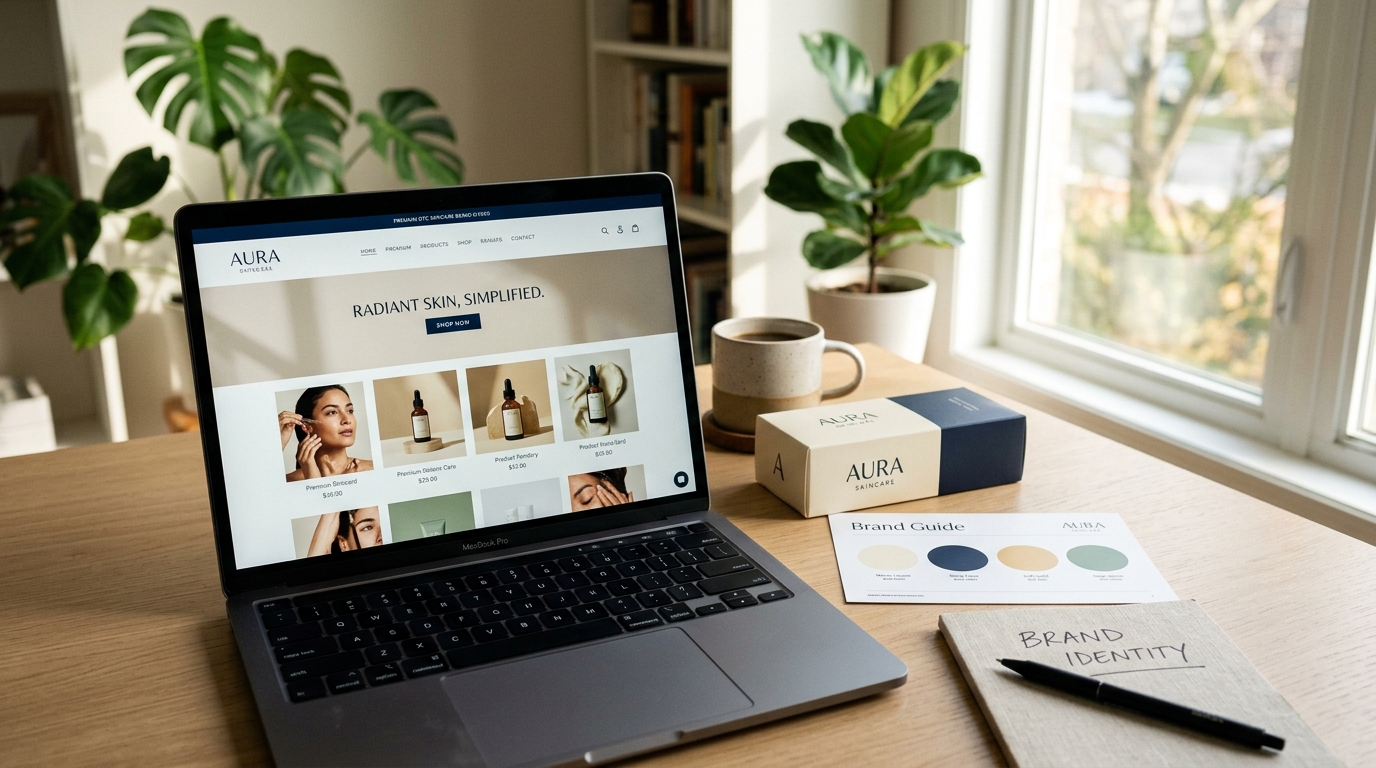
Shopify has millions of active stores. The product selection, the pricing, even the store themes — a lot of them look similar. The thing that actually separates a store people buy from repeatedly versus one they visit once and forget is brand.
Not brand in the abstract sense. Brand in the very concrete sense: do you look like a real company, and does shopping with you feel like a consistent experience?
This is something you can build deliberately. It doesn't require a large budget or a design team.
Why most Shopify stores don't look like brands
The default Shopify setup gets you functional fast. Pick a free theme, upload your products, add a banner — and you're live. The problem is that "functional fast" and "looks like a brand" are different targets.
Free Shopify themes are designed to be neutral, which means they have almost no personality. They're a blank canvas, which is great if you have a clear visual direction and bad if you don't. Most sellers don't, so they end up with a store that looks like every other store on the same theme.
The gap isn't a missing app or a more expensive theme. It's that nobody has made decisions about what this store should actually look, sound, and feel like.
The four things that make a Shopify store look like a brand
1. A consistent color palette used everywhere
Pick two or three colors. Use them for your logo, your banner, your product image backgrounds, your button colors, your email headers, your packaging inserts.
This sounds obvious but most stores don't do it — they'll have a teal logo, orange "buy now" buttons, and product photos on five different backgrounds. That fragmentation is what makes a store look assembled, not designed.
If you don't have brand colors yet, look at your product range and your target customer. What emotional register do you want? Bright and playful, clean and premium, warm and approachable? Your colors should reinforce that feeling.
2. Product photography that looks like it came from the same shoot
Nothing undermines a Shopify store faster than inconsistent product photos. You've seen it: one product on white background, another in a lifestyle setting, another with bad lighting from when you photographed it in your kitchen at 10pm.
Buyers compare your products to each other. If your photos look inconsistent, it makes your store look unfinished. It also makes it harder for buyers to develop a sense of your brand aesthetic, which is what drives repeat purchases.
The fix: pick one primary photo style and apply it to every product. White background for one hero shot, then one lifestyle shot with consistent color temperature and setting. It doesn't need to be elaborate — it needs to be consistent.
If you have existing photos that are all over the place, AI product photography tools can help standardize them. BrandForge AI will take your product photos and transform them to a consistent professional standard — useful when you're catching up on a backlog.
3. Copy that sounds like it was written by the same person
Your About page, product descriptions, FAQ, and email automations should all sound like they came from the same voice. Most Shopify stores don't achieve this because these pages get written at different times, in different moods, with different levels of care.
Define your brand voice with three adjectives — pick what's actually true about how you communicate, not what you aspire to. "Direct, warm, and a little irreverent" is a more useful brief than "friendly and professional."
Then apply that voice consistently. If you're direct, your product descriptions don't hedge. If you're warm, your order confirmation emails sound like they were written by a human who cares. Small things, but they compound.
4. A logo and brand mark that works everywhere
Shopify's header space is small. Your logo needs to work at small sizes — a wordmark or simple icon, not a detailed illustration that becomes illegible when it's 40px tall.
Test your logo in the places it actually appears: Shopify header, email header, product packaging, social media profile image. If it doesn't read clearly at all those sizes, simplify it.
AI brand kit generators can produce a logo, color palette, and font set from your brand description in minutes — useful if you need something professional without a long agency process.
The brand profile: your single source of truth
Once you've made these decisions, document them. A brand profile doesn't need to be a 40-page document. You need:
- Your color hex codes
- Your logo files in multiple formats
- Your font names and where to get them
- Your voice guidelines (3 adjectives, what to avoid)
- Your photo style description (one paragraph)
Keep this somewhere your whole operation can access — even if "your whole operation" is just you and a VA. When you need a new product banner, a new email sequence, a promotional graphic for Black Friday, this document is your brief.
Tools like BrandForge AI let you build this profile once and then generate consistent social posts, product content, and visual assets from it automatically — without rebuilding the context from scratch every time.
Measuring whether your brand is working
The simplest indicator: what's your return customer rate? Shopify's Analytics dashboard shows this. If buyers aren't coming back, brand recognition is one of several things to look at — along with product quality, pricing, and customer experience.
A secondary indicator: do people recognize your store on Instagram or in their inbox without seeing your name? If someone follows you on Instagram and immediately knows a photo is yours from the visual style alone, you've built brand recognition.
That level of recognition doesn't happen by accident. It happens because someone made deliberate decisions about how everything looks and sounds, and then applied those decisions consistently over time.
That's the whole thing. Not complicated, but it does require making the decisions — and then actually executing on them.
Build your Shopify brand profile in minutes. Start free on BrandForge AI — import your store URL and get a complete brand kit instantly.